

When we learn our native language, we first listen, then speak, then read, and finally write. Listening, speaking, reading, and writing are the four language skills we need to develop for effective communication.
Listening and reading are receptive: input, that is, exposure to authentic language in use. Speaking and writing are productive: output, that is, the action of producing language as part of the process of learning a second language.
To achieve these four basic language skills, you must surround yourself with English: Make English a part of your life at home, at work, and during your free time.

Keep reading to find tips that will help you overcome the difficulties you encounter when you want to improve your English skills.
Use and practice the language whenever and wherever you can. Practice makes perfect, which means that if you want to improve a particular skill, you have to practice it. As a student, you should master all four language skills: listening, speaking, reading, and writing.
Listening

It plays a very important role in learning any language. Effective listening ensures comprehension and helps improve speaking accuracy, among other things. How can you improve your listening skills? By listening actively, that is, paying attention not only to what is being said, but also to how it is said. We recommend the following:
- Listen to music, old or modern; whichever type you prefer, but pay attention to the lyrics. Sometimes reading the lyrics can help you understand the song.
- Watch movies, TV shows, news, online content. If you can watch a movie several times, do it. Watch first with subtitles, and then, when you feel more comfortable, without them. You can have English music at home or on your mobile device. Even if you’re not actively listening, your ears will get used to the sounds of the language.
- Attend plays, exhibitions, talks, etc. in English organized by schools or English-speaking groups.
Speaking

It is often the most difficult of the four language skills, but as soon as you can speak a little English, there are many ways to improve quickly and have a lot of fun.
- Join voice chats. Technology has advanced a lot in terms of social networks, so wherever you live, you will find a chat room to join.
- Speak and record yourself. This may sound funny, but it will help you notice how you can improve by replaying the recording several times until you are satisfied with the results.
- Speak with your classmates in English when you are not in class. You can even create a group to play, eat, or just chat together.
Reading

It’s a brain process and it takes time to develop: your mind has to give meaning to the words, phrases, and expressions represented by symbols, as well as understand the grammar and structure of the language used in the passage you’re reading. Developing strong reading skills will be very useful for your future. You can read: The Happiness Warrior
- Books in English and online articles. Perhaps books you have already read in your native language or that have been turned into movies. Try starting with easy books, even children’s books and comics: the images will help you understand even if you don’t know all the words.
- Change the operating system of your phone, laptop, or tablet to English. Associating a function with a specific word will improve your vocabulary.
Writing
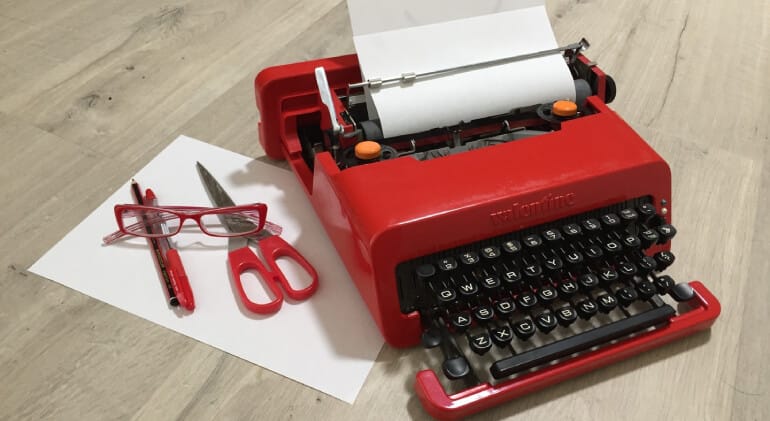
Although it may be intimidating for many people, anyone can get used to writing with a little discipline and a willingness to learn.
- Write words or expressions that you find useful, along with their meaning and examples. Seeing them in sentences will help you remember them better. You can use them in a diary.
- Write comments on blogs in English. Today, blogs are websites similar to magazines. Many people use them to share their ideas on a topic or explain things, from how to knit a scarf to very complex technical or philosophical topics. A common feature of these blogs is that they are interactive: readers can comment or discuss the ideas shared. Even if you are not a blog enthusiast, you can find some that encourage you to participate. So, just do it. You don’t need to be an expert to write a few sentences about your thoughts on the blog content.
All the advice mentioned above can be reduced to one thing: PRACTICE, PRACTICE, PRACTICE!! Whatever your learning style, whatever your native language, the key to acquiring and mastering a foreign language is to PRACTICE it as much and as often as possible.
EBC's Courses Index
Choose the EBC course that best meets your requirements

Exam Prepartion Courses

English classes with a teacher

Online English Courses

Teacher Training Courses