

The communicative approach is based on the idea that successful language learning comes from communicating real meaning. When learners engage in authentic communication, they use natural language acquisition strategies, enabling them to learn how to use the language effectively.
Example of a communicative approach
Practicing question forms by asking students to find out personal information about their classmates is an example of the communicative approach, as it involves meaningful communication.
Classroom activities guided by the communicative approach aim to produce authentic communication at all levels. Lessons emphasize skills over systems, are learner-centered, and often use authentic materials.
As theories underlying the audiolingual method and situational language teaching were questioned by linguists such as Noam Chomsky (1957), a new trend emerged in language teaching. Communicative Language Teaching (CLT) emphasizes interaction as both the means and goal of language learning. CLT responds to the Audio-Lingual Method and extends the Notional-Functional Curriculum. Task-based language learning is a more recent refinement of CLT and is widely popular.
Shortcomings of structuralism and behaviorism
The audiolingual method and situational teaching were criticized in the 1960s. Noam Chomsky rejected the structuralist view of language, distinguishing between performance and competence. He showed that structuralism and behaviorism could not account for language creativity and the uniqueness of individual sentences, since children can produce infinite sentences they have never heard. Imitation, repetition, and habit formation alone cannot explain language acquisition.
A shift towards communicative competence
In Europe, growing interdependence necessitated improved language teaching for adults. New objectives emerged:
- The primacy of communicative aspects of language.
- An increasing focus on meaningful learning.
- Greater learner-centered approaches.
- The reduced emphasis on structural language teaching.
Notional/functional dimension of language
Linguists addressed language’s functional and communicative potential. Speech act theory demonstrates that when we speak, we do something (Halliday, 1975):
- Achieve objectives
- Control behavior
- Create interaction with others
- Express personal feelings
- Learn
- Create imaginary worlds
- Communicate information
Applied linguists emphasized teaching language based on communicative competence rather than mastery of structures (Van Ek & Alexander, 1975; Wilkins, 1976). They distinguished two types of meaning:
- Notional categories: concepts like time, sequence, quantity, location, frequency.
- Functional categories: speech acts such as requests, offers, complaints, invitations, etc.
A “notion” is a context in which people communicate. A “function” is the speaker’s purpose within that context. For example, shopping involves language functions like asking about prices and negotiating.
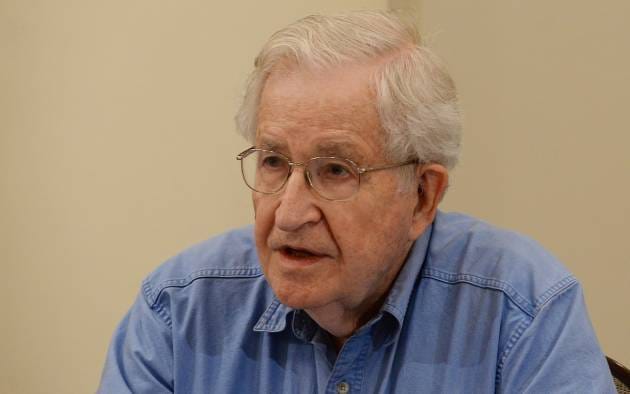
Image credit: Nuclear Age Peace Foundation, on Wikimedia.

One language competence or multiple competences?
Dell Hymes argued that linguistic theory must include communicative competence. Canale and Swain (1980) defined four dimensions of communicative competence:
- Grammatical competence: knowledge of language rules.
- Sociolinguistic competence: understanding social context, roles, beliefs, and shared knowledge.
- Discourse competence: interpreting elements of a message in relation to the whole text.
- Strategic competence: strategies to initiate, maintain, repair, and redirect communication.
Learning theory
The communicative approach emphasizes:
- Communication: activities involving real communication enhance learning.
- Tasks: using language for meaningful tasks supports learning.
- Meaning: meaningful and authentic language drives learning.
Acquire or learn?
Stephen Krashen distinguished between acquisition and learning. Acquisition is unconscious and natural, while learning is conscious and rule-based. Learning does not lead to acquisition.
Syllabus of the communicative method
CLT organizes instruction according to theoretical and functional language categories rather than structures. Focus areas:
- Interaction: using language to communicate
- Tasks: using language for meaningful activities
- Learner: prioritizing learner needs and interests
Merits of CLT
- CLT is holistic, emphasizing communication over traditional structural curriculum.
- CLT adds vitality and motivation in the classroom.
- CLT is learner-centered, considering student interests and needs.
- In an information-driven world, CLT plays a key role in education.
Criticisms of CLT
- The curriculum was criticized for replacing one list (grammar structures) with another (notions and functions).
- Functional categories overlap and lack systematic organization like grammar.
- CLT emphasizes language use in context over formal structures; balance is necessary.
- It relies heavily on the functional-notional syllabus, which can be demanding for students.
- Teachers must adapt lessons to student needs, adding workload.
- Some classrooms cannot support group work or authentic materials.
Despite criticisms, CLT is widely accepted. It is effective if teachers balance communicative activities with structured grammar teaching. CLT brings energy and engagement to the classroom.
Header image credit: iStock.com/fizkes
EBC's Courses Index
Choose the EBC course that best meets your requirements

Exam Prepartion Courses

English classes with a teacher

Online English Courses

Teacher Training Courses